Wondering how your phone or laptop gets to you? The consumer electronics supply chain runs from mined materials to component makers, contract assemblers and retailers, across several countries. Each step adds time, cost and risk.
For the wider market picture, read the consumer electronics industry overview.
| Item | Value |
|---|---|
| Global consumer electronics market value | Expected to surpass US$1tn by 2030 |
| Businesses naming cost control their top supply chain priority | 53% |
| Businesses with a robust risk management and scenario analysis process | 32% |
| Distributors reporting an average three to six weeks’ delivery delay | 69% |
| Parts in each consumer electronics product | Several hundred |
The figures come from a Maersk-published survey report (March 2025) and a Boise State College of Business and Economics article (March 2025). Surveys and forecasts change, so check the sources before you rely on the figures.
Three tiers from brand to raw material
A supply chain is a network, not a straight line. The Boise State article describes the U.S. version as a vast network connecting manufacturers, suppliers, retailers and consumers, and notes that each product has several hundred different parts.
That article also splits the chain into three major tiers:
- Tier 1: the original equipment manufacturers (OEMs) and brands that produce the original products.
- Tier 2: suppliers of essential components such as CPU chips, semiconductors, displays and batteries, with a direct business relation to the OEMs.
- Tier 3: suppliers of basic raw materials and necessary components to tier 2 suppliers, with no direct relation to the OEMs.
The practical effect is distance. The brand on the box often has no direct contract with the company that supplies the silicon or cobalt inside it.
What happens between the mine and the shelf
An Umbrex industry overview lays out the value chain as a series of stages, each adding value and cost. For electronics, it runs roughly like this:
- Raw materials: electronics rely on mined minerals like lithium for batteries and cobalt, as well as silicon for semiconductors.
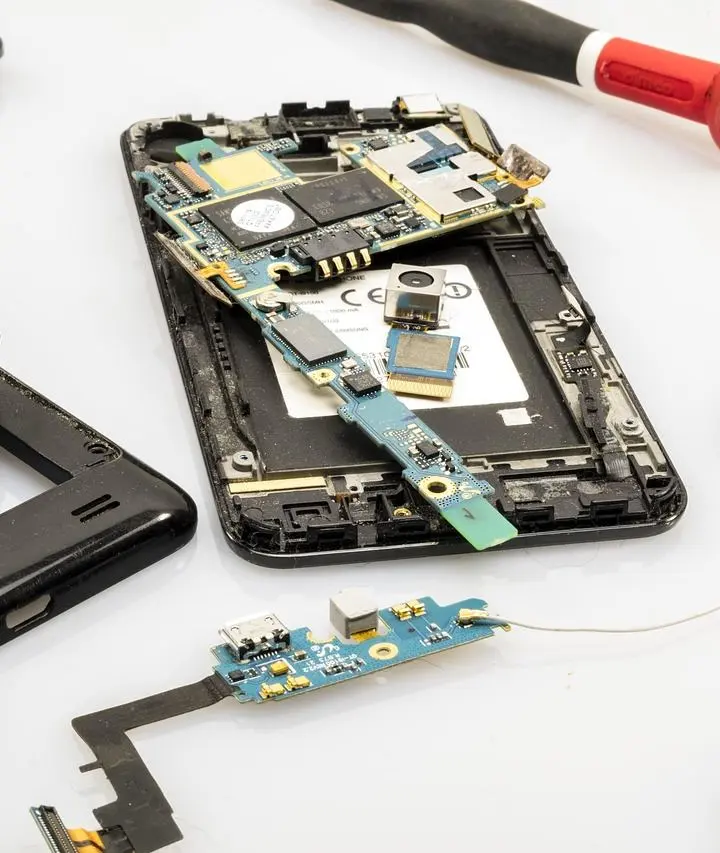
- Components: printed circuit boards, microchips, display panels, camera lenses and batteries, many made in Asia-Pacific manufacturing hubs.
- Assembly: components become finished devices, either at the brand’s own plants or at contract manufacturers.
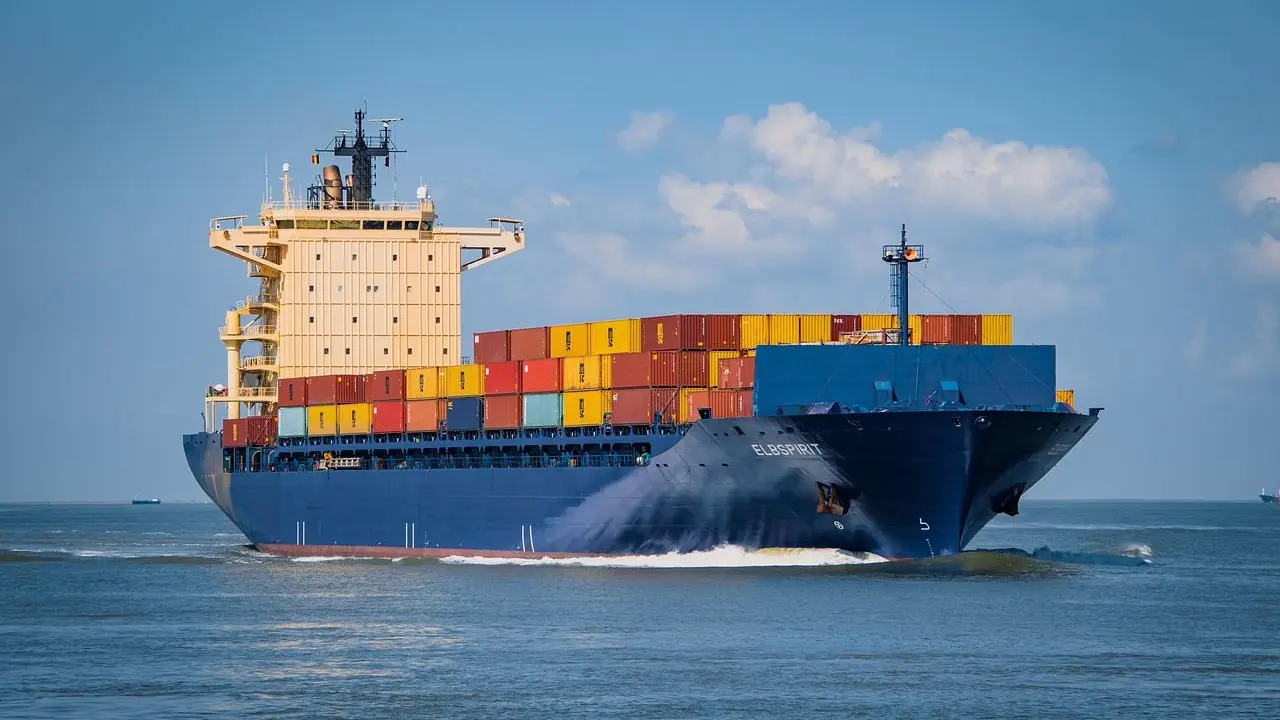
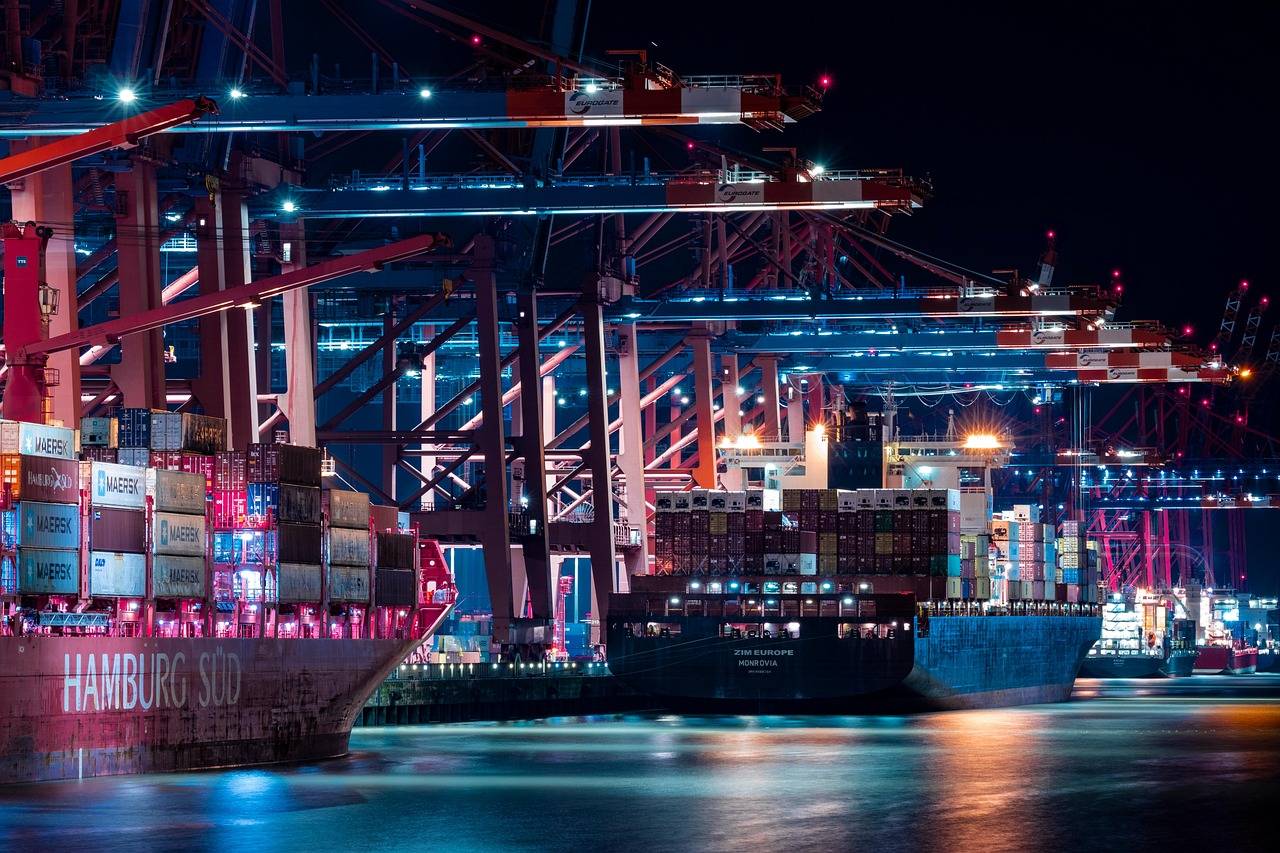
- Distribution and sale: finished devices move through logistics and retail to the end user.
Assembly is where outsourcing is most visible. The same overview says consumer electronics production is frequently outsourced to Electronics Manufacturing Services (EMS) or Original Design Manufacturers (ODMs), with Foxconn, Pegatron and Flex given as examples of firms that build devices for various brands.
One phone, many countries
The Boise State article traces a single smartphone to show how spread out the work is. These are neutral examples of how one brand’s components are sourced:
- Displays: made by LG or Samsung in South Korea.
- Flash memory and DRAM: supplied by Kioxia in Japan.
- Main chip: designed in California but manufactured by Taiwanese company TSMC.
- Final assembly: the largest manufacturer of Apple iPhones is Foxconn in China.
Assembly is also moving. ABI Research said in May 2024 that heavy reliance on contract manufacturing in China has forced companies like Apple and Samsung to diversify, with growing investment in Vietnam and India.
Boise State reports that Samsung has no manufacturing facilities in China but has six big factories in Vietnam.
Where the consumer electronics supply chain breaks
A spread-out chain is cheap to source but fragile. The Boise State article says global diversification provides easy access to raw materials and cost-effective manufacturing, but it also creates lengthy lead times and high vulnerability to natural disasters, geopolitical tensions and material shortages. In one survey it cites, 69% of distributors experience an average three to six weeks’ delay in deliveries.
The Maersk report gives a concrete case. The global semiconductor shortage that started in 2020 was estimated to have disrupted global GDP growth by 1% in 2021.
The same report lists the risks leaders rank highest:
- Rising geopolitical tension, ranked first.
- Demand volatility, ranked next.
- Exchange rate volatility, a bigger concern for consumer electronics than for other tech sub-sectors.
Preparation looks thin. Just 32% of consumer electronics businesses have a robust process for risk management and scenario analysis, compared with 40% in other sectors.
What companies prioritise: cost, carbon and partners
The Maersk report draws on a survey of 75 supply chain and logistics leaders at consumer electronics businesses, part of a larger survey of 500 technology executives. It found cost control is the top priority for 53%, more than in any other sector. Reliability (20%) and resilience (19%) rank much lower.
Carbon is the second pressure, and it pulls against cost:
- 44% are prioritising supply chain decarbonisation, against 34% in other sectors.
- 49% say decarbonising supply chain and logistics is too expensive.
- 55% say there are limited options to make their supply chain and logistics more sustainable.
Partners matter too. 69% want their supply chain and logistics partners to do more to help them innovate, yet 56% say their partners focus only on current needs.
Visibility may pay off. Among technology businesses, 77% of those with high-visibility supply chains grew revenue in the past three years, compared with 46% of those with low visibility.
How devices reach you, and what happens afterwards
Online selling is reshaping the last step. ABI Research said in its 14 May 2024 release that consumer electronics has one of the highest, often the highest, online retail penetration levels of any retail segment. Online sales are expected to pass 50% of overall sales in several advanced economies by 2030.
The same release expected smart appliance shipments to grow at a 34.9% CAGR to 2030, while smartphone and tablet shipments stay steady. Where devices are sold and which products grow will keep changing how the chain is organised.
The chain does not stop at the sale. Boise State counts post-production logistics and spare parts management as part of it, so if a device fails you may want to read how electronics warranty works. For who is allowed to fix it, what is right to repair covers the wider debate.
Frequently asked questions
What are the tiers of the consumer electronics supply chain?
Show answer
Boise State describes three major tiers: brands and OEMs, component suppliers, and raw material suppliers.
Why do brands use contract manufacturers?
Show answer
Consumer electronics production is frequently outsourced to EMS or ODM firms, according to the Umbrex overview. Many assembly plants sit in Asia to draw on skilled labor and efficient supply networks.
Why are devices made in several countries?
Show answer
Different parts come from different specialists, such as display makers in South Korea and memory suppliers in Japan. Brands are also spreading assembly beyond China, as ABI Research noted in May 2024.
What is the biggest supply chain risk?
Show answer
In the Maersk survey (March 2025), rising geopolitical tension ranked first, followed by demand volatility.
How big is the consumer electronics market?
Show answer
The same Maersk report says the global market is expected to surpass US$1tn by 2030.