Wondering how big the industry behind your phone, TV and laptop really is? This consumer electronics industry overview gives you the short answer: roughly US$1.03tn in revenue by one 2026 estimate, led by phones, though forecasters disagree.
| Item | Value |
|---|---|
| Worldwide consumer electronics revenue, 2026 | US$1.03tn |
| Largest segment (Telephony), 2026 | US$521.41bn |
| Largest country (China), 2026 | US$221.3bn |
| Forecast annual growth, 2026 to 2030 | 2.81% a year |
| Online share of revenue, 2026 | 16.1% |
| Expected volume by 2030 | 8.58bn pieces |
These figures come from Statista’s worldwide consumer electronics outlook. Market forecasts change as data is revised, so check the source before you rely on them.
What counts as consumer electronics?
Consumer electronics are electronic devices designed mainly for personal and household use. Statista describes them as devices for communication, computing, entertainment, content consumption and digital interaction. It splits the market into six main segments:
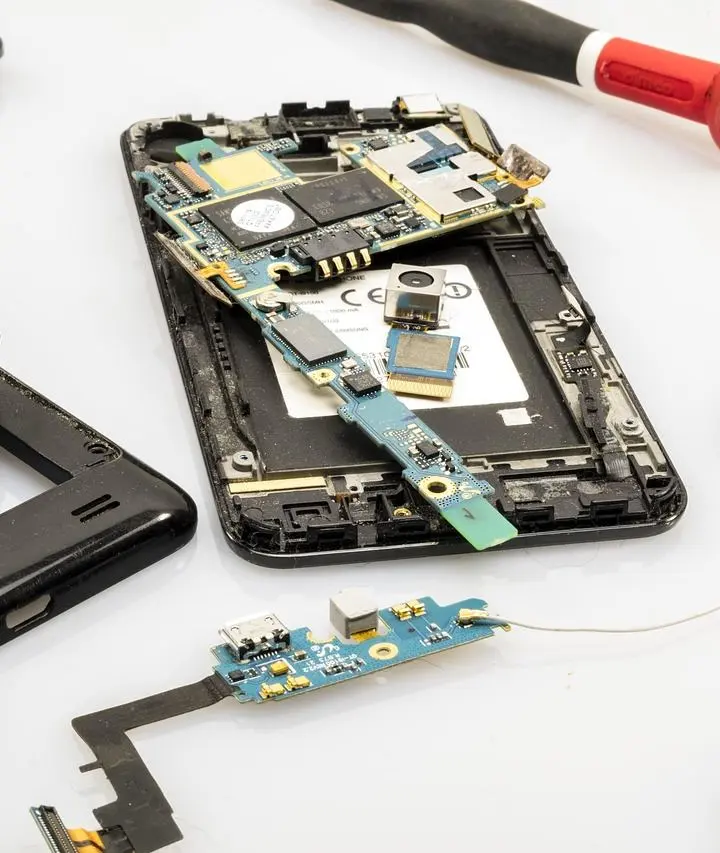
- Telephony: smartphones, feature phones and landline phones.
- TV, Radio & Multimedia: televisions, radios, digital cameras, speakers and headphones.
- Computing: laptops, desktops, tablets and other computing devices.
- TV Peripheral Devices: smart streaming devices, smart remotes and video players.
- Drones: unmanned aerial vehicles used for personal purposes.
- Gaming Equipment: gaming consoles and VR headsets.
Just as important is what each forecaster leaves out. Statista excludes household appliances, enterprise-grade equipment, standalone software and subscriptions, and accessories sold separately unless they are part of a defined sub-market.
Fact.MR takes a similar approach to its market scope: it excludes enterprise procurement, industrial electronics, professional AV equipment, component manufacturing, spare parts and repair services. By contrast, Global Market Insights discusses home appliances alongside smartphones and wearables in its trend analysis.

Because accessories sold separately generally sit outside the headline numbers, our mobile accessories guide covers that side of the market. If you want help with individual product types, the consumer electronics guide goes category by category.
How big is the market, and why do the estimates differ?
Statista puts 2026 worldwide revenue at US$1.03tn and expects annual growth of 2.81% from 2026 to 2030. You can see the details on the Statista page.
Other research firms publish very different numbers for the same industry. Their 2025 estimates run like this:
- Future Market Insights estimates USD 689.7 billion in 2025.
- Fact.MR values the market at USD 691.6 billion in 2025.
- Straits Research values it at USD 855.66 billion in 2025.
- Grand View Research values it at USD 1,319.3 billion in 2025.
- Global Market Insights estimates USD 1.6 trillion in 2025.
Growth forecasts vary too. Grand View Research projects a CAGR of 5.9% from 2026 to 2033, and Straits Research projects 6.2% over 2026 to 2034 (see their Grand View and Straits pages). Fact.MR projects 7.0%, while Global Market Insights projects 9.3% from 2026 to 2035.
The gaps mostly come from scope and method: which products are counted, whether appliances are in, and how each firm models sales. Treat any single figure as one analyst’s view, and use the spread to judge direction rather than precision.
Where is the money made: products, regions and brands
Phones lead on every list. In Statista’s 2026 data, Telephony is the largest segment at US$521.41bn, against US$1.03tn for the whole market.
The size of the smartphone share depends on the definition. Grand View Research gives smartphones 51.2% of 2025 revenue, Future Market Insights estimates 38.4% of 2026 product sales, and Fact.MR says about 30% in 2026.
Geography is more consistent: Asia leads. Statista says China generates the highest revenue at US$221.3bn in 2026.
On growth, Fact.MR has China leading at an 8.2% CAGR to 2036, followed by India at 7.5%. It links this to premium smartphone and smart home demand in China and to rising smartphone replacement in India.

Statista names Apple, Samsung, Huawei, Lenovo and Xiaomi as examples of companies active across several segments.
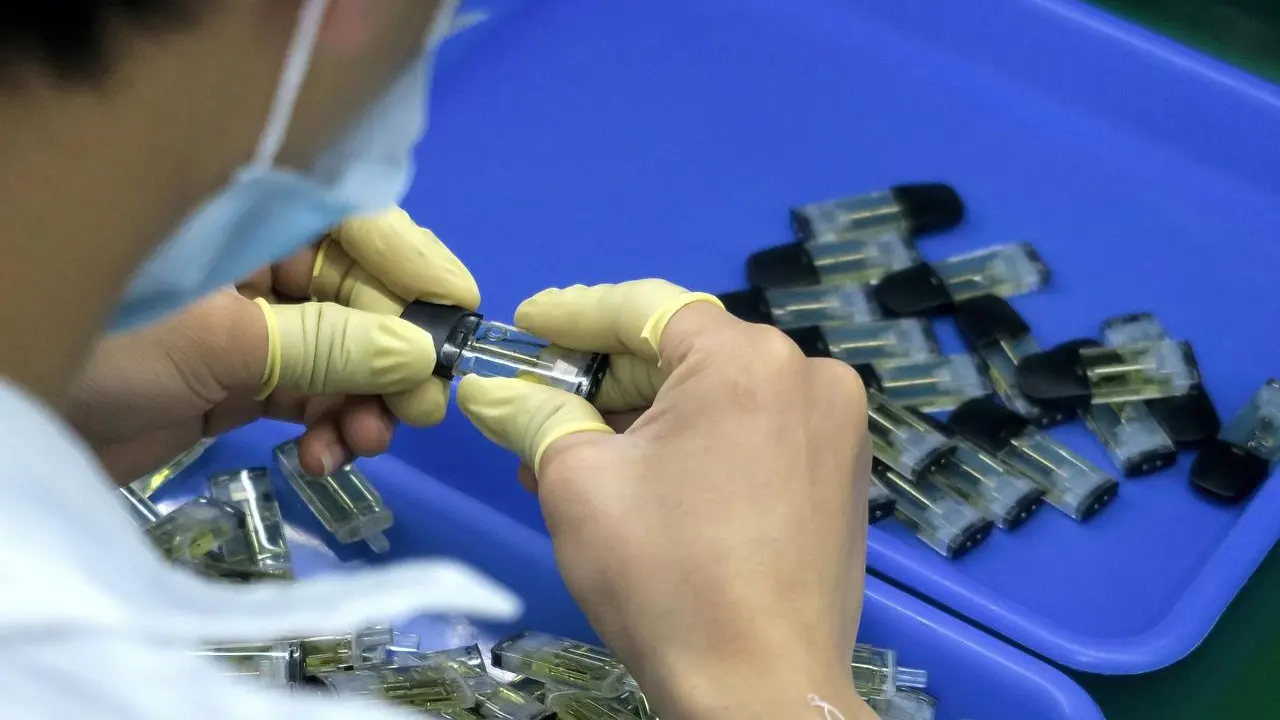
Behind the brands sits a long chain of component makers, assemblers and logistics firms. Our explainer on the consumer electronics supply chain follows that route from parts to shelves.
How do devices reach buyers, and how often do people replace them?
Sales channel estimates are even less consistent than market size, because “online” and “specialty store” are defined differently. The published figures include:
- Statista expects online sales to account for 16.1% of 2026 revenue.
- Straits Research lists online retailers as the leading channel, with 29.6% in 2025.
- Future Market Insights expects online stores to hold 41.6% of 2026 sales.
- Fact.MR says specialty stores lead with about 36% in 2026, helped by demonstrations and trade-in services.
- Grand View Research says the offline segment held the largest share in 2025.
The takeaway is that buyers use both. Shops still matter for products people want to handle first, and web shops are growing; the sources above are Statista, Straits Research, Future Market Insights, Fact.MR and Grand View Research.
How shops make a living on these products is a separate question, and our guide to electronics retail margins looks at it.
Future Market Insights says owners replace phones and laptops every three to four years. Television, appliance and audio buyers return less often, with purchases spaced across seven to ten years.
That rhythm shapes where brands spend on launches and trade-in offers. It also affects you as a buyer, since the length of ownership decides how much a warranty matters, and our page on how electronics warranty works explains what one covers.
What is shaping the next few years?
Analysts point to a handful of forces, some pushing growth and some holding it back:
- On-device AI. Straits Research says neural processing units let phones, laptops and wearables run AI tasks locally, which reduces reliance on cloud servers.
- Smart home standards. The same report cites more than 13,100 Matter-certified product models from nearly 500 vendors.
- Health wearables. It lists health and fitness as the fastest-growing application, at a 7.2% CAGR for 2026 to 2034.
- Trade and costs. Fact.MR names tariff uncertainty between the United States and China, and component cost inflation in OLED display and advanced semiconductor supply chains, as brakes on growth.
- Short product lives. Global Market Insights lists fast product obsolescence among the challenges.
For you, the practical effect is that devices change quickly and prices respond to component costs. Weigh how long you plan to keep a product before paying extra for the newest feature.
Safety, standards and what happens at end of life
Global Market Insights notes that electronics which are not designed properly can lead to overheating, electrical safety problems and high energy consumption (source). That is why safety, radio and environmental rules are part of how the industry works.
Each topic has its own explainer:
- Battery risks are covered in our guide to lithium-ion battery safety standards.
- The European conformity label is explained in what does ce marking mean on electronics.
- US radio-frequency rules are covered in what is fcc certification for electronics.
- Your options when a device breaks are laid out in what is right to repair.
- Disposal is covered in how to recycle old electronics.

Taken together, these topics follow a device from design to disposal. Knowing which rules apply at each stage makes it easier to judge a product, a seller or a claim.
Frequently asked questions
How big is the consumer electronics industry?
Show answer
Statista puts 2026 worldwide revenue at US$1.03tn (source).
Which product category is the biggest?
Show answer
Phones. Statista’s Telephony segment is the largest, at US$521.41bn in 2026 (source). Grand View Research also gives smartphones the largest share of 2025 revenue (source).
Do consumer electronics figures include accessories and appliances?
Show answer
It depends on the forecaster. Statista excludes household appliances and accessories sold separately unless a sub-market includes them (source). Check each report’s scope before comparing totals.
How often do people replace their devices?
Show answer
Future Market Insights says phone and laptop owners replace them every three to four years, while television, appliance and audio purchases are spaced across seven to ten years (source).