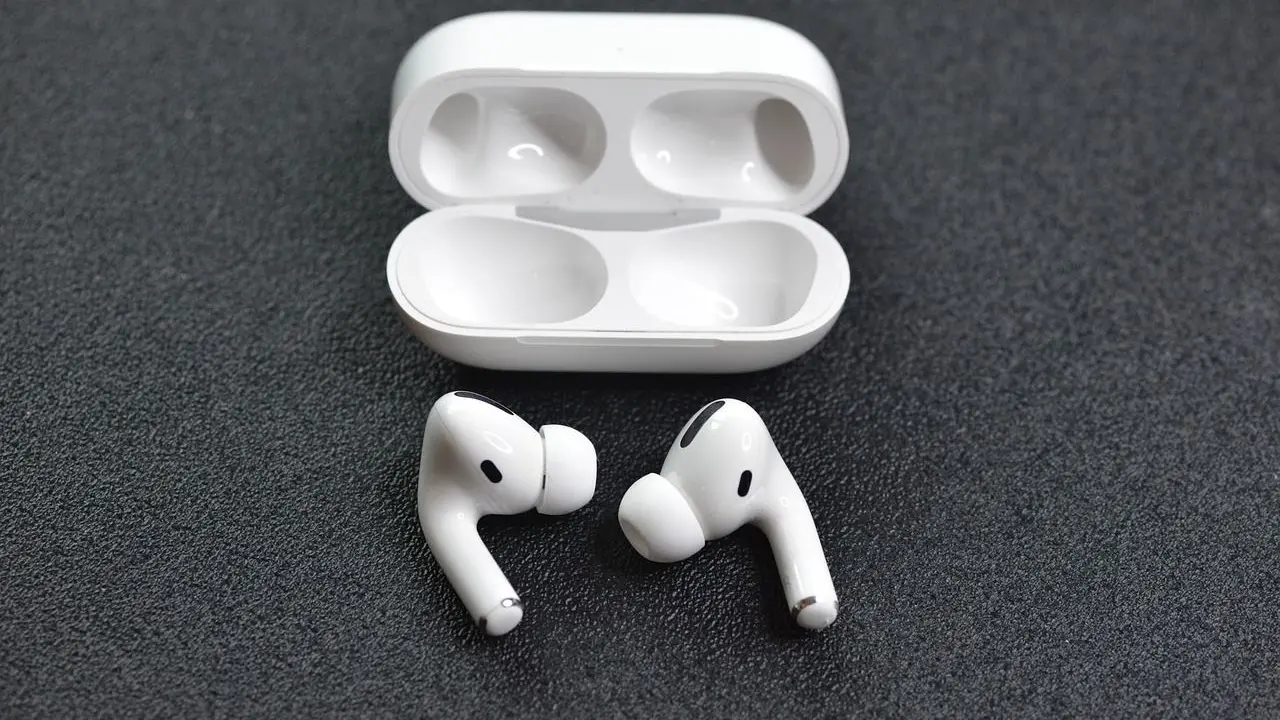
Wondering how do true wireless earbuds work without any wire between them? Your phone sends audio over Bluetooth, and in classic setups one bud passes the other side’s channel along. Newer LE Audio lets you skip that relay.
This explainer belongs to our wider mobile accessories guide, which covers the kit around your phone.
| Item | Value |
|---|---|
| Minimum Bluetooth Core Specification for LE Audio | Version 5.2 |
| Left and right earbud synchronisation with multi-stream audio | Within tens of microseconds |
| Possible battery-life gain with LE Audio | As much as 50% or more in supported devices |
| LC3 codec frame intervals | 7.5 ms and 10 ms |
| LC3 codec sampling rates | 8 kHz to 48 kHz |
These figures come from Macworld’s July 2022 feature and the Bluetooth SIG’s LC3 overview. Specifications and product support change, so check the source before you rely on them.
The classic way: one earbud receives, the other relays
In Classic Bluetooth audio, a phone can only stream to one device at a time, according to the freeCodeCamp LE Audio handbook. True wireless earbuds therefore use a workaround with three steps:
- Your phone sends the stereo stream to the primary earbud, usually the right one.
- The primary earbud receives both the left and right channels.
- It relays the other channel to the secondary earbud over a separate Bluetooth link.
Macworld describes the end result like this: each earbud filters out the left or right channel and plays back the correct one, as its LE Audio feature explains.
Why does the relay cause problems?
The relay works, but the freeCodeCamp handbook lists four costs of the design:
- The primary earbud has double the battery drain, so it tends to die first.
- The secondary earbud gets higher latency.
- Left and right channels can drift out of sync.
- If the primary earbud runs out of battery or loses its connection, both earbuds go silent.
Calls add another wrinkle. Music uses the A2DP profile, but calls switch to HFP, which uses a different codec at dramatically lower quality, and the early HFP headsets used the CVSD codec at 64 kbps, as the same handbook notes.
How LE Audio changes how true wireless earbuds connect
LE Audio was finalized in 2022 and replaces the Classic Bluetooth audio stack with a new architecture built on Bluetooth Low Energy, per the freeCodeCamp handbook. The “LE” stands for Low Energy, as the Bluetooth SIG’s LE Audio FAQ explains.
Its headline feature for earbuds is multi-stream audio. Your left earbud connects to your phone and receives just the left channel, your right earbud makes its own connection for the right channel, and the two stay synced within tens of microseconds, according to Macworld.
Under the hood, this relies on a core feature called LE Isochronous Channels, introduced in version 5.2 of the Bluetooth Core Specification, as the SIG FAQ describes. No more relay means the primary earbud no longer has to forward audio for its partner.
The Bluetooth SIG listed lower power consumption and smaller batteries among the reasons a new standard was needed, in its LC3 overview. Macworld’s July 2022 feature says LE Audio has the potential to extend battery life by as much as 50% or more in supported devices. Android Central notes user reports of longer battery life with LE Audio phones, so treat the gain as a possibility, not a promise.
What the LC3 codec does
A codec compresses the audio at the source and decompresses it at the receiving end for playback, as the Bluetooth SIG puts it. Three settings shape the result:
- Sample rate: the number of samples taken per unit of time.
- Bit depth: the number of bits of information in each sample.
- Bit rate: the number of bits encoded per second, which correlates with audio quality.
LC3 is the new codec in LE Audio. The SIG says it provides higher quality at the same rates as its predecessor SBC, or even better quality at a much lower data rate, and the freeCodeCamp handbook puts that at roughly half the bitrate of SBC.
Per the SIG overview, LC3 supports frame intervals of 7.5 ms and 10 ms, sampling rates from 8 kHz to 48 kHz, and bit depths of 16, 24 and 32 bits per sample. It also strongly recommends packet loss concealment at the receiving end, which hides the effect of missing or corrupted frame data.
For comparison, Classic Bluetooth only requires one form of audio compression, the SBC codec. Other codecs may be supported, such as AAC from Apple, or aptX and LDAC from Qualcomm and Sony, according to Macworld.
Auracast: one source, many earbuds
LE Audio also adds broadcast audio, which lets one source send a stream to an unlimited number of Bluetooth audio receivers. Broadcasts can be open to any in-range device, or closed so only devices with the correct passkey can join, per the Bluetooth SIG.
The SIG brands this as Auracast. Macworld says you will be able to join a broadcast from a menu on your phone, by scanning a QR code or by tapping an NFC tag.
What do you need on both ends?
Both devices have to cooperate. Android Central reminds readers that the sending phone and the receiving earbuds must support the same codec for its features to work.
A high Bluetooth version number on the box does not guarantee LE Audio. Support requires the 5.2 core specification, but not every 5.2 device has it, and many earbuds use the low-energy link only for pairing and battery reporting, as Macworld explains.
Backward compatibility is limited. The SIG FAQ says existing Classic Audio earbuds will not work with LE Audio sources, because sinks and sources must use the same approach, although many products are expected to support both. It also tells consumers to check with the manufacturer about whether an existing product can be upgraded.
As of Android Central’s March 2024 report, the industry was still waiting for LE Audio’s potential to be fully realized, so check the current product listing before you buy. You can find the original Android Central FAQ for that status.
If wearables interest you, our explainer on what is a smart ring is a good next read. If you film with your phone, see how to choose a phone tripod for steady-shot options.
Frequently asked questions
Do true wireless earbuds need a wire between them?
Show answer
No. In classic setups, the phone connects to one earbud, which relays the other channel to its partner. With LE Audio, each earbud can receive its own synchronized stream directly from the phone.
Why does one earbud run out of battery first?
Show answer
In the classic relay design, the primary earbud receives both channels and forwards one, so its battery drains faster, as the freeCodeCamp handbook explains.
Does a newer Bluetooth version mean my earbuds have LE Audio?
Show answer
Not necessarily. According to Macworld, many earbuds with a modern version number still send audio using the old Classic frameworks.
What does LC3 mean for sound quality?
Show answer
The Bluetooth SIG says LC3 gives higher quality at the same rates as SBC, or better quality at a much lower data rate. Real-world results depend on your phone and earbuds.
Can I use LE Audio earbuds with any phone?
Show answer
Only if the phone also supports LE Audio, or if the earbuds support Classic Audio as well. The SIG FAQ says many LE Audio products are expected to keep supporting Classic Audio.