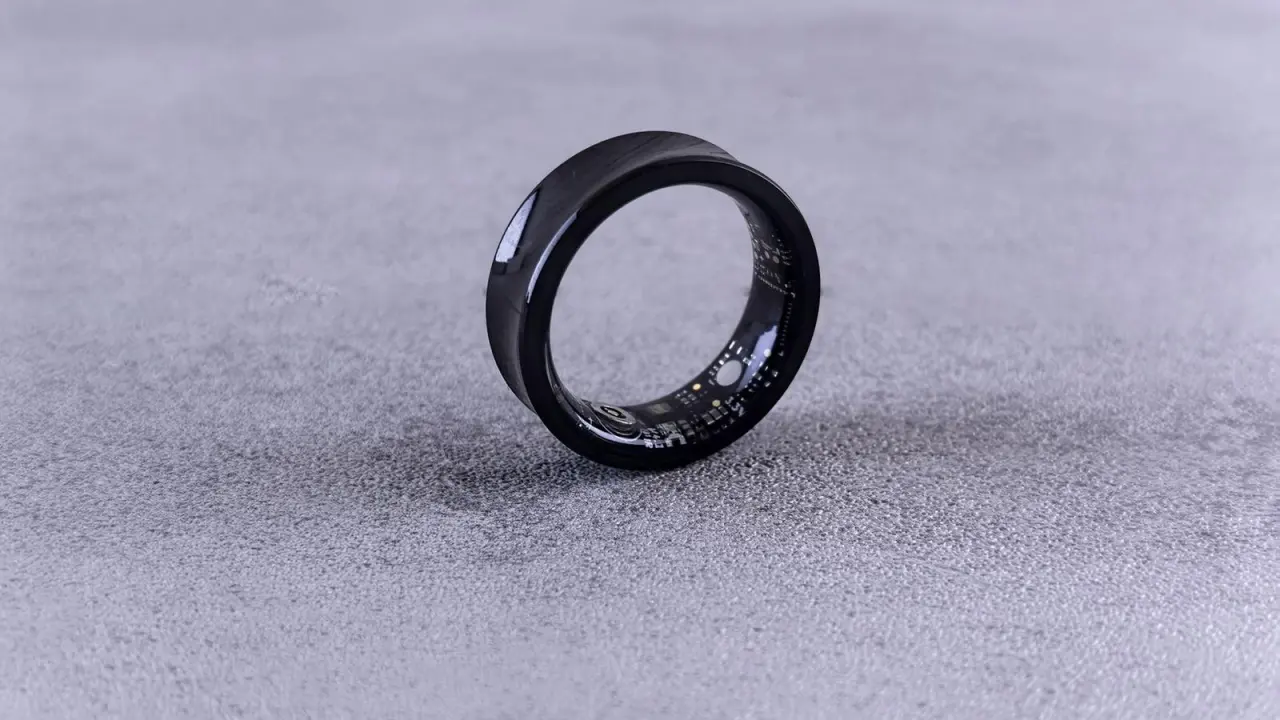
Wondering what is a smart ring and whether it’s worth wearing? It’s a finger-worn sensor that tracks sleep, heart rate and temperature; it’s solid on sleep versus wake, weaker on sleep stages.
This page is part of the mobile accessories guide, which covers the add-ons that sit around your phone.
| Measure | Reported value |
|---|---|
| Sleep detection sensitivity (Oura Ring Gen3 vs lab sleep study) | 95.1% |
| Wake detection specificity (same study) | 73.4% |
| Overall four-stage sleep accuracy (same study) | 76.3% |
| Deep sleep accuracy (same study) | 53.3% |
| Temperature sensor accuracy (Oura Ring Gen4) | 0.07°C |
| Heart rate correlation with ECG (Oura internal study, Gen4) | r² = 0.996 |
These figures come from a review of smart ring sleep research. They can change as devices and studies are updated, so check the source before you rely on them.
How a smart ring measures your body
A smart ring is a wearable that uses photoplethysmography (PPG) sensors to track physiological changes linked to sleep. The ring shines LED lights into your finger’s blood vessels and measures how much light is absorbed or reflected back.
The Oura Ring Gen4 is one example. It uses an 18-path PPG system that samples at 250 Hz during sleep, plus a 3-axis accelerometer to detect movement and temperature sensors accurate to 0.07°C.
From those signals, a ring typically reports:
- Heart rate and heart rate variability (HRV) during sleep
- Skin temperature, shown as a deviation from your personal baseline
- Movement, which helps separate sleep from wake
- An estimate of light, deep and REM sleep
The catch is that a ring infers rather than observes. Rings infer sleep stages from heart rate patterns and movement, while the clinical reference, polysomnography (PSG), directly observes brain activity in a lab, and trained technicians score each 30-second epoch of sleep.
How accurate is sleep versus wake detection?
This is the strongest part of a smart ring’s job. A validation study at Brigham and Women’s Hospital looked at 35 healthy adults wearing the Oura Ring Gen3, Apple Watch Series 8 and Fitbit Sense 2 during overnight PSG, covering 421,045 epochs across 96 nights.
In that study the Oura Ring reached 95.1% sensitivity for detecting sleep. Specificity for detecting wake was lower at 73.4%, meaning the ring sometimes misclassified wake periods as sleep.
Total sleep time looks good too. Against medical-grade actigraphy in a 7-day home study, the ring showed an intraclass correlation coefficient (ICC) of 0.85, where values above 0.75 count as excellent agreement, and the mean difference was 3.4 minutes.
Where sleep-stage tracking falls short
Splitting the night into stages is much harder. The same Brigham study found the Oura Ring Gen3 reached 76.3% overall accuracy in four-stage classification (wake, light, deep, REM) compared with PSG.
Cohen’s kappa, which accounts for agreement by chance, was 0.65. Values between 0.61 and 0.80 indicate substantial agreement, but clinical applications typically require kappa above 0.80.
Accuracy also varied by stage:
- Light sleep: 79.5% accuracy
- REM sleep: 72.1% accuracy
- Deep sleep: 53.3% accuracy, the weakest result
A systematic review of 107 studies found ICC values for deep sleep and REM sleep ranging from just 0.13 to 0.37, which indicates poor to fair agreement. Treat your deep sleep number as a rough estimate, not a measurement.
Heart rate, HRV and temperature: the stronger signals
Rings do better on signals they measure directly. In Oura’s own internal validation study, the Gen4 ring reached r² = 0.996 against ECG for heart rate and r² = 0.980 for HRV. That is a company’s own test, so independent checks matter.
For HRV, trends matter more than single readings. When it drops for several consecutive nights, it can coincide with feeling run down or fighting off illness.
Temperature is the other useful signal. Finger temperature correlates closely with core body temperature fluctuations, and these patterns can give insight into circadian rhythm, illness and menstrual cycle phases. During sleep, body temperature naturally drops by about 1-2°C.
How to use a smart ring sensibly
The measurement itself can create anxiety about sleep, which defeats the purpose of tracking. A few habits keep the data useful:
- Look at total sleep time and consistency first; they are the best-supported numbers.
- Watch weekly trends in HRV and temperature rather than one bad night.
- Treat sleep-stage percentages, especially deep sleep, as approximate.
- Do not use a ring to diagnose a sleep problem; the clinical reference is a lab study.
A ring is one of several small gadgets that extend what your phone can do. If you are also weighing video gear, read how to use a phone gimbal in our how to use a phone gimbal guide, and for audio see how do true wireless earbuds work.
Frequently asked questions
Is a smart ring more accurate than a smartwatch?
Show answer
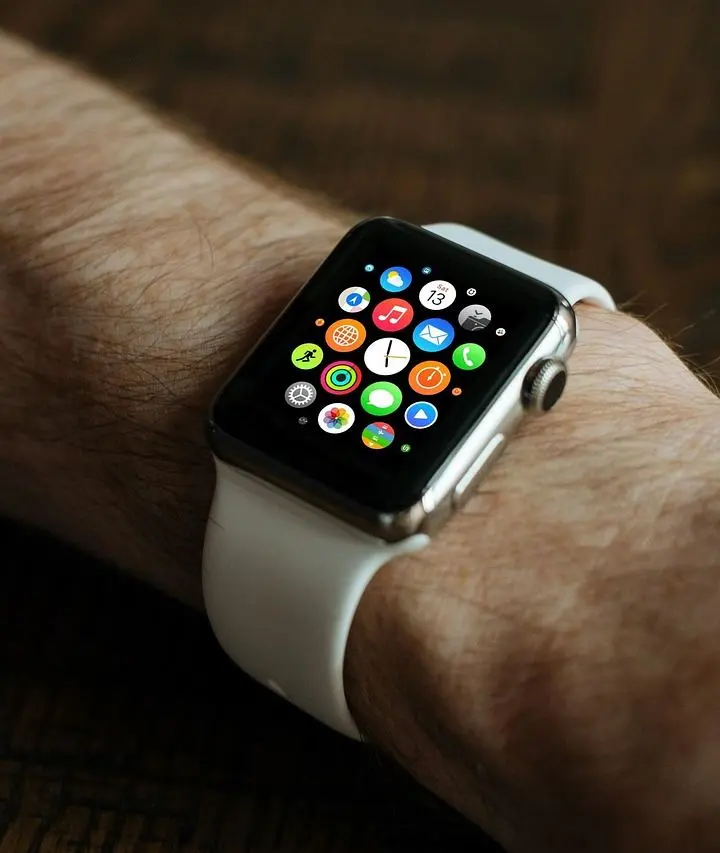
The Brigham study tested an Apple Watch Series 8 and a Fitbit Sense 2 alongside the Oura Ring Gen3, but the source text available here reports only the Oura results. That is not enough to rank rings against watches.
Can a smart ring diagnose a sleep disorder?
Show answer
No. Polysomnography is the clinical gold standard, and the ring’s stage agreement (kappa 0.65) sits below the 0.80 that clinical applications typically require. Speak to a clinician if you are worried about your sleep.
Why does my ring score my sleep worse than I feel?
Show answer
Sleep stages are inferred from heart rate and movement, and deep sleep accuracy was only 53.3% in the study. One poor score is weak evidence, so check the trend over several nights.
What does a smart ring track besides sleep?
Show answer
Heart rate, HRV, skin temperature and movement. Temperature is shown as a deviation from your personal baseline, which can help flag illness or cycle changes.