Lost your keys and wondering how do Bluetooth trackers work? A tag broadcasts a short Bluetooth signal, nearby phones pass its location to a server, and you see where it was last spotted.
This explainer is part of our mobile accessories guide.
| Item | Value |
|---|---|
| Typical tracker size | Small, coin-size devices |
| Location delay when a tracker is misused | As short as 15 minutes |
| AirTag-style address change near its owner | Every 15 minutes |
| AirTag-style address change when separated | Every 24 hours |
| Tile advertisement data change | Every 15 minutes |
| Tile Bluetooth address | Static, never changes |
These figures come from a TU Darmstadt study in the Proceedings on Privacy Enhancing Technologies. Manufacturers can change how their trackers behave, so check the source before you rely on them.
The four steps behind every lost-item search
The tags in these networks are low-cost, Bluetooth-only devices, so they lean on a crowdsourced finding network. In a Cornell research group’s summary, a finder device that detects a short-range Bluetooth signal from a lost tracker forwards that information to the vendor’s servers, along with its own location.
The TU Darmstadt study shows the whole cycle in four steps:
- Setup: you pair the tag with your phone, and the two exchange secret keys.
- Broadcast: the tag sends out Bluetooth advertisements.
- Upload: a finder device that hears the tag uploads a location report.
- Download: you open the app and download the report to see the tag on a map.
The tag itself never works out where it is. Your phone only learns where it was last spotted, because the owner of the tag can query the vendor for that report, as the Cornell summary describes.
Which finding networks are out there?
The Cornell summary names four large networks run by major vendors, each covering billions of devices (source):
- Apple’s Find My
- Google’s Find My Device
- Samsung’s SmartThings Find
- Life360’s Tile network
Your tag only works well with the network it was built for. A tag is as good as the number of finder devices that pass near it, which is why a lost item in a busy place is more likely to be spotted than one in an empty field.
If your tag lives on a phone case, you may also be weighing magnetic add-ons, and our explainer on what is a magsafe charger covers those. If you are really comparing wearables, read our smartwatch vs fitness tracker comparison instead.
How AirTag-style and Tile-style trackers differ
Apple’s AirTag-style design is built around rotating keys. According to the TU Darmstadt study, the trackers generate rotating private-public key pairs, so nearby finder devices can use end-to-end encryption for all uploaded locations to Apple’s servers.
The tag also behaves differently depending on whether your phone is close:
- Near its owner’s iPhone, it keeps a Bluetooth connection and does not advertise its public key, so finder devices cannot report its location. Its address changes every 15 minutes.
- After it disconnects, it advertises its public key and becomes findable. Its address then changes every 24 hours.
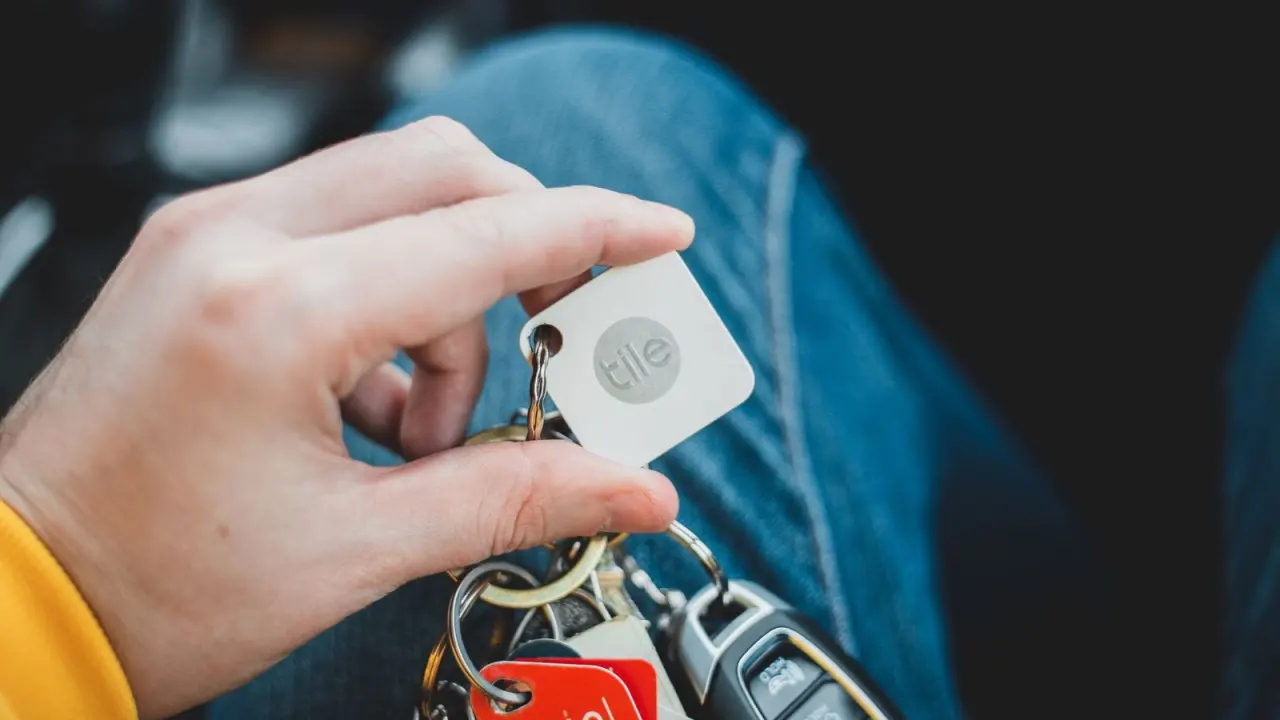
Tile took another route. The same study says Tile trackers have been sold since 2012 and were the first to offer offline finding by crowdfinding, and that its finder devices are all smartphones with the Tile app installed.
A Tile tracker is always findable and does not care whether your phone is nearby. Its advertisements contain an identifier reserved for Tile plus proprietary data that changes every 15 minutes, but its Bluetooth address is static and never changes, which allows identification over several years.
Why the same technology can be used to stalk people
The design that finds your keys can also follow a person. The TU Darmstadt authors note that someone hiding a tracker can follow a victim’s location with a delay of only 15 minutes, and they classify this as a method of stalking.
The study combined an online survey of 5,253 people with user data from a detection app. Here is what it found:
- 19.13% of respondents had previously experienced stalking, and 8.47% had been a victim of location tracking (survey).
- 44.28% of stalking victims had been subjected to location tracking, with cars the most common hiding place, followed by backpacks and purses (survey).
- The AirGuard detection app, with over 200,000 active installations, sends about 1,400 alarms daily for unwanted tracking (app data).
The Cornell group adds that privacy and abuse prevention pull in opposite directions. Privacy calls for a tag’s advertisements to be frequently rotated and unlinkable, so nobody can fingerprint the tag, which is why address rotation exists in the first place (Cornell summary).
How do unwanted-tracker alerts work?
Alerts are meant to tell you when an unknown tag keeps moving with you. The Cornell summary says these features typically alert users when an unknown tracker has been moving with them for an extended period, but there is no industry standard, and each vendor’s approach is different and varies widely in effectiveness.
Many fixes also leave work to the victim. The TU Darmstadt study says almost all solutions require a person to manually scan for a tracker, with hurdles such as an artificial 10-minute delay or the requirement to walk while scanning (study).
Industry is working on common rules. A June 2026 Internet-Draft with authors from Apple and Google lists best practices so that location-tracking accessories work with unwanted-tracking detection on mobile platforms, but as of that draft it is still a work in progress (June 2026 draft).
An earlier May 2023 draft defines an alert as notifying you of an unrecognized accessory that may be travelling with you, with actions that include playing a sound on the accessory if it is in Bluetooth Low Energy range (May 2023 draft).
If you get an alert or suspect a hidden tag, these steps are a sensible start:
- Play the sound on the unknown tag if your phone offers it and the tag is in range.
- Check the places the survey found most often: cars, backpacks and purses.
- Consider a detection app such as AirGuard, which the study analysed.
- If you feel unsafe, contact local emergency services or someone you trust.
Frequently asked questions
Do Bluetooth trackers use GPS?
Show answer
The tags described in the Cornell summary are low-cost, Bluetooth-only devices. The location comes from the finder device that hears the tag and forwards its own location to the vendor.
Will any tracker work with any phone?
Show answer
Not always. The TU Darmstadt study says Tile trackers work across operating systems, unlike Apple AirTags or Samsung SmartTags.
How fast does a tag’s location update?
Show answer
It depends on finder devices passing nearby. The same study reports that someone misusing a tracker can follow a victim’s location with a delay of only 15 minutes.
Can a tracker be used to follow me?
Show answer
Yes, misuse is documented. In the survey, 44.28% of stalking victims had been subjected to location tracking.
Is there one standard for all trackers?
Show answer
As of the Cornell summary there is no industry standard for anti-stalking features. A June 2026 draft from Apple and Google authors proposes best practices, and it is a work in progress.