Weighing usb-c vs lightning for your next cable or phone? USB-C wins on speed and power: up to 40Gbps against 480Mbps. Lightning only matters if you own an older iPhone.
This comparison is part of our wider consumer electronics guide.
| Item | Value |
|---|---|
| Lightning data speed | 480Mbps (USB 2.0 rates) |
| USB-C data speed (USB4) | Up to 40Gbps |
| Lightning native power | 12W/2.4A |
| USB-C native power | 100W/3A, up to 240W/5A |
| Lightning introduced | 2012 |
| EU deadline for USB-C on most devices | Fall 2024 |
These figures come from Computerworld’s June 2022 analysis and Daily Maverick’s September 2023 explainer. Specifications and rules can change, so check the source before you rely on them.
Speed and power: where USB-C pulls ahead
On data, the gap is large. As of Computerworld’s June 2022 report, USB-C can support USB4 at up to 40Gbps, while Lightning transfers data at USB 2.0 rates of 480Mbps.
Power follows the same pattern. The same report puts USB-C’s native power support at 100W/3A, rising to 240W/5A, with USB Power Delivery for fast charging. Lightning has native support for 12W/2.4A.
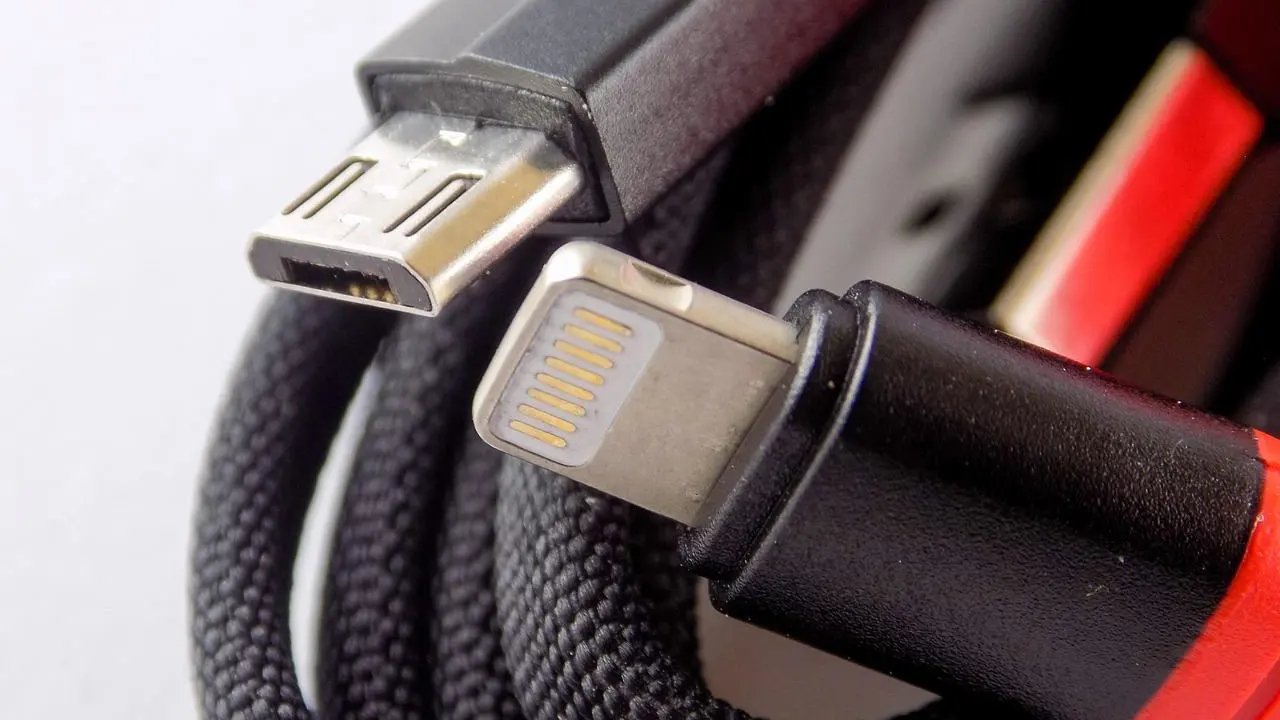
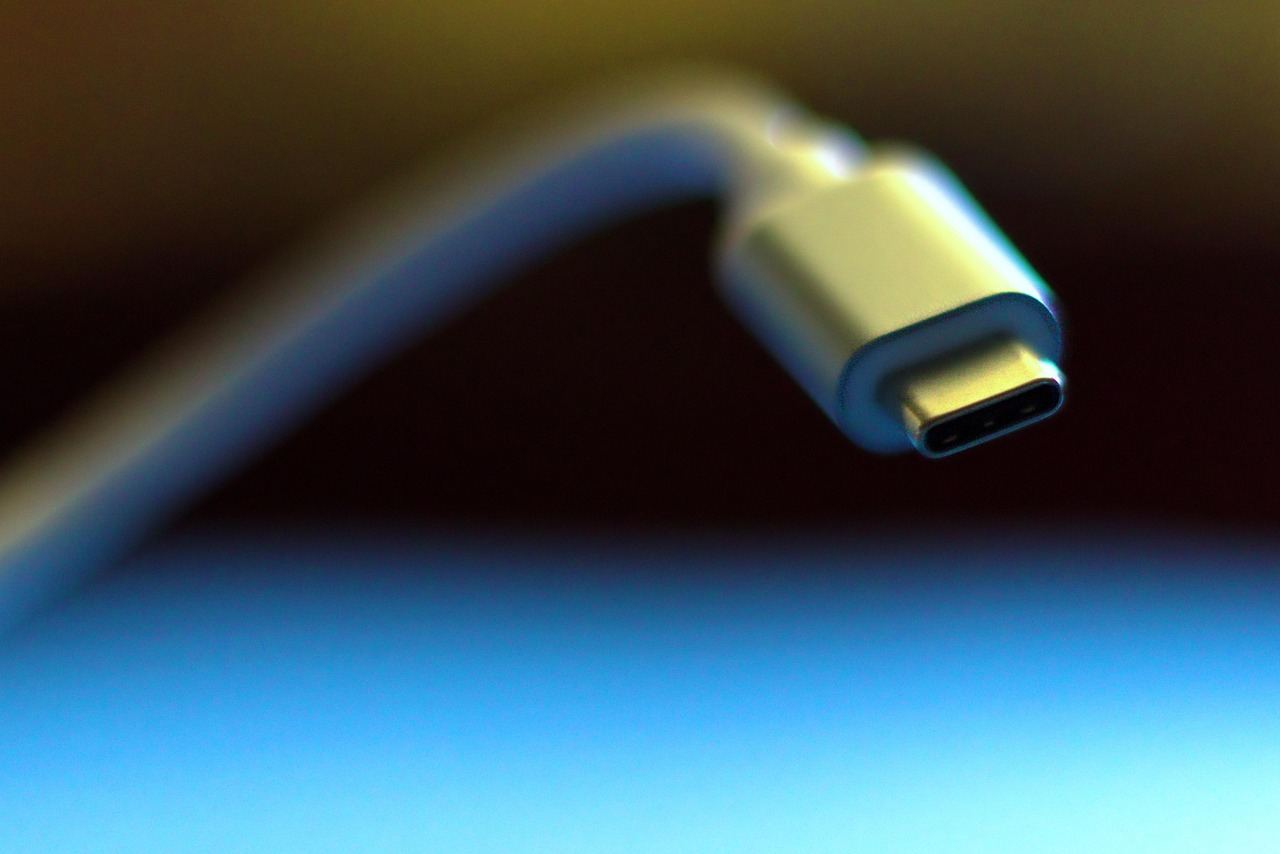
One caution: USB-C is just the name of the connector, not the entire cable, according to Daily Maverick. What a given cable can actually do depends on the wider specification behind it.
A short history of both connectors
Daily Maverick’s September 2023 explainer gives a simple timeline:
- 2003: Apple introduces the 30-pin dock connector.
- 2012: Apple introduces Lightning, first on the iPhone 5, as the successor to that dock connector.
- About two years later: USB-C arrives, borrowing Lightning’s reversible design.
Reversibility was Lightning’s key visible innovation, because you no longer had to check which way up the plug went. USB-C copied that convenience, so on everyday handling the two feel similar.
The bigger difference is who controls them. USB-C was developed by a consortium whose members include Intel, Microsoft and Apple, and any business can use the standard. Apple, by contrast, does not allow others to use its proprietary accessories unless they agree to a license.
Some Apple fans argue that Lightning may be harder-wearing than other standards. The same explainer reports that claim but does not back it with test data, so treat it as opinion.
Why did the EU push for a common charger?
In June 2022, the EU announced it would require makers of most consumer electronic devices to adopt USB Type-C by fall 2024. The rule covers mobile phones, tablets, e-readers, earbuds, digital cameras, headphones and headsets, hand-held videogame consoles and portable speakers that charge over a wired cable. Laptops follow within 40 months after the rules enter into force.
Two reasons were given. The committee estimated that disposed of and unused chargers add up to about 11,000 tons of e-waste a year, and it wanted clearer labelling of charging and data capacities so people can tell whether an existing charger will work.
Apple had argued that a single standard across the market could stifle innovation, according to Trusted Reviews.
What this means for your cables and chargers
The practical upside is fewer cables. USB-C is far more widespread than Lightning, which is limited to Apple products, so Trusted Reviews notes one cable can charge and move data between your phone, tablet, e-reader and Bluetooth headphones. Computerworld adds that USB-C is supported by most modern devices, including Android phones and Windows PCs.
Not every USB-C product is equal, though. Computerworld says the quality and capability of USB-C chargers differ greatly by manufacturer, and an analyst quoted there warned that cheap all-in-one cables, including some sold for $5, don’t support fast charging.
Before you buy, run through this checklist:
- Read the charging and data labels on the device and the cable.
- For a Lightning iPhone, fast charging needs a USB-C to Lightning cable and a 20W or higher power adapter, according to Computerworld, citing Lifewire.
- Avoid unbranded multi-connector cables that promise every plug at a very low price.
If you carry a charger on the move, our notes on how to choose a power bank explain what to check on the output side. When you replace a phone, it also helps to read how to choose a phone case before you buy one for the new port layout.
Which should you choose?
For anything new, USB-C is the sensible pick. It is faster, carries more power and is shared across brands, and the EU rules described by Computerworld in June 2022 pushed most small devices that way.
Lightning still makes sense in one case: you already own an iPhone or accessory that uses it. Keep a good cable for that device, and make sure any new cables you buy for other gadgets are USB-C.
Frequently asked questions
Is USB-C faster than Lightning?
Show answer
Yes. As of Computerworld’s June 2022 report, USB-C with USB4 reaches up to 40Gbps, while Lightning runs at USB 2.0 rates of 480Mbps.
Can I fast charge a Lightning iPhone from a USB-C charger?
Show answer
Both parts matter. As of Computerworld’s June 2022 report, you need a USB-C to Lightning cable and an adapter of 20W or more, so the cable alone is not enough.
Are all USB-C cables the same?
Show answer
No. Computerworld reports that quality and capability differ greatly between manufacturers, and cheap all-in-one cables don’t support fast charging.
Why did Apple move the iPhone to USB-C?
Show answer
Daily Maverick’s September 2023 explainer says the switch followed the EU’s adoption of a single standard, and that Apple chose to comply instead of ignoring the request.